
 =======
 >>>>>>> 63583bcf2d1c48866d6cb09279ca425cc19a4907



By Adrian Cole | Updated on April 15, 2026 | 🕓 12 min read
Key Highlights
- Can sim racing really lead to a professional motorsport career?
- Why are Formula 1 teams increasingly dependent on simulators?
- How realistic are modern sim racing platforms compared to real cars?
- What skills transfer from virtual racing to real-world competition?
- Why do some sim racers struggle when transitioning to real racing?
For a long time, sim racing was dismissed as nothing more than a “game.” It was seen as digital entertainment—something young people enjoyed in front of screens, worlds apart from the high-risk, high-cost, and highly professional realm of real-world motorsport. Competitive racing, after all, was defined by roaring engines, physical danger, and enormous financial barriers. Sim racing appeared to belong to an entirely different universe.
Over the past decade, however, that perception has changed fundamentally.
Driven by rapid advances in computing power, physics engines, virtual reality, artificial intelligence, and embodied intelligence systems, sim racing has moved closer to reality than ever before. It is no longer simply “racing that looks realistic,” but a sophisticated digital environment that increasingly mirrors real motorsport in vehicle dynamics, tire behavior, track conditions, and strategic decision-making.
More importantly, sim racing is no longer operating at the margins of the sport. It has become deeply integrated into professional racing ecosystems—reshaping how drivers are trained, how teams develop cars, and how new talent is identified. What was once a hobby is now emerging as a genuine talent reservoir for real-world racing.
From “Video Game” to High-Fidelity Simulation
Racing games have always been one of the most popular genres in gaming history. Yet for many years, there was a clear gap between games and professional motorsport. Early titles prioritized visual spectacle and accessibility, simplifying physics and vehicle behavior. Track environments lacked precision, and player performance had little relevance outside the virtual world.
That gap has narrowed dramatically.
Modern simulation platforms such as iRacing, rFactor 2, and Assetto Corsa were built with realism—not entertainment—as their core design philosophy. Vehicle models are constructed using real engineering data. Tire wear, temperature windows, grip degradation, and load sensitivity are calculated dynamically. Tracks are created using LiDAR laser scanning, capturing surface undulations, camber changes, and even curb geometry with astonishing accuracy.
The result is not just a “realistic game,” but a functional training environment.
Drivers are no longer just playing—they are learning racecraft, experimenting with setups, and making decisions under pressure in ways that closely resemble real-world competition.
Sim Racing Competitions as Talent Filters
Once the technology reached a sufficient level of realism, competitive structures naturally followed.
In recent years, high-level sim racing competitions such as the iRacing World Championship, the Virtual Le Mans Series, and official Formula 1 Esports events have grown into fully professionalized championships. These are no longer casual online races. They feature strict sporting regulations, long seasons, and an intensity comparable to many junior single-seater categories.
Success in these competitions demands far more than fast reflexes. Drivers must understand race strategy, tire management, fuel saving, overtaking psychology, and car setup—skills that translate directly to real motorsport.
This creates something motorsport has traditionally lacked:
a scalable, low-cost talent identification system
Young drivers who could never afford karting programs or junior formulas can now demonstrate their ability in a measurable, repeatable, and highly competitive environment.
Even elite drivers have acknowledged this shift.
Max Verstappen is a well-known sim racing enthusiast and has publicly supported the idea that virtual racing can reveal real talent. He has publicly stated his desire to help top sim racers transition into real-world racing, lending credibility to the idea that virtual performance can signal genuine potential.
However, the transition from sim racing to professional motorsport is rarely immediate.
In most cases, sim racing does not replace traditional development pathways—it integrates into them. A more typical progression looks like this:
sim racing → esports competition → driver academy or testing opportunities → junior series → professional racing
Sim racing acts as an entry point, helping drivers gain visibility and prove their potential. From there, structured programs, scouting systems, and development teams play a critical role in bridging the gap to real-world competition.
Why Professional Teams Depend on Simulators
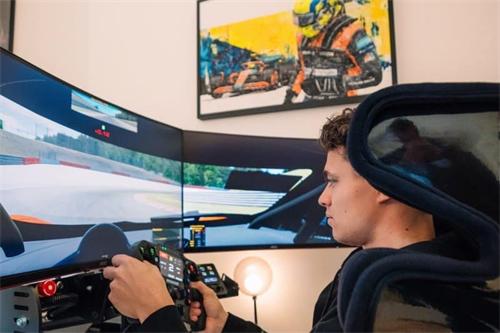
For professional racing teams, sim racing is no longer about discovering talent alone—it is a core operational necessity.
In modern motorsport, especially Formula 1, real-world testing is severely restricted. Track time is limited, wind tunnel hours are capped, and every kilometer of running carries enormous cost. Real-world testing can cost thousands of euros per kilometer when factoring in logistics, tire wear, and operational expenses.
By contrast, simulator-based training costs a fraction—often estimated at around one-twentieth of real-world testing expenses. Teams can complete 70–80% of their strategic preparation in simulators, saving hundreds of millions of euros over multiple seasons.
Today, nearly every professional team—from established manufacturers to new F1 entrants such as Cadillac—relies heavily on simulators. Engineers use them to test setup variations, aerodynamic concepts, and tire strategies before committing resources to physical development. Drivers use them to learn circuits, rehearse race scenarios, and refine their driving style.
Millimeter-Level Accuracy and Competitive Advantage
At the top level, simulator fidelity has reached astonishing precision.
Formula 1 teams maintain digital replicas of all 23 race circuits, built using laser-scanned data. Surface irregularities, elevation changes, curb profiles, and grip variations are all translated into computational models. Real-world telemetry feeds back into the simulator continuously, allowing engineers to model complex variables such as brake degradation in high temperatures or tire wear rates in wet conditions.
This precision directly influences results on track.
During the 2023 Saudi Arabian Grand Prix, Red Bull driver Sergio Pérez used the team’s simulator extensively to adapt to the unique challenges of racing under artificial lights. By rehearsing visual cues and reflection patterns in advance, he entered the race with a critical advantage. The difference between his simulated lap times and real race performance was reportedly extremely close—an extraordinary level of accuracy that helped secure victory.
In this context, simulators are no longer secondary tools. They are effectively an additional racetrack.
The Rise of the “Motorsport + Esports” Business Model
As sim racing became embedded in professional racing operations, its commercial potential also became clear.
Virtual Grands Prix and official esports championships have demonstrated that sim racing can sustain fan engagement, even when real-world events are disrupted. More importantly, they offer motorsport organizations a scalable, standalone ecosystem that operates independently of physical constraints.
This “motorsport + esports” dual-engine model allows elite racing IPs—especially Formula 1—to expand beyond traditional audiences. Esports lowers the entry barrier for fans, attracts younger demographics, and creates a new pathway into the sport, both as spectators and participants.
For the industry, this is not merely marketing—it is structural expansion.
Why Sim Racing Produces Real Racing Skills
Sim racing works as a talent development tool because its core demands align closely with real racing fundamentals.
Whether virtual or physical, racing is ultimately about understanding lines, managing tires, conserving fuel, executing overtakes, defending positions, and responding to dynamic race conditions. Top sim racers often develop a deep technical understanding of vehicle behavior and setup adjustments—sometimes rivaling junior engineers in their analytical approach.
Compared to traditional karting-based pathways, sim racing dramatically reduces economic and physical risk. It also enables an unprecedented volume of practice. With detailed telemetry available after every session, drivers can analyze inputs frame by frame, optimizing braking points, steering angles, and throttle application.
This data-driven learning environment accelerates skill development in ways that traditional training cannot easily match.
Not All Sim Racers Succeed
While success stories attract attention, the transition from simulation to real-world racing is far from guaranteed.
Some highly skilled sim racers struggle when stepping into physical race cars. The reasons are often complex and overlapping:
- Physical adaptation: Real racing involves sustained G-forces, heat, and fatigue that simulators cannot fully replicate.
- Tire feedback differences: Understanding grip through physical sensation—rather than visual cues—requires a different skill set.
- Psychological pressure: The presence of real risk, financial stakes, and competition environments introduces a level of stress that simulation cannot reproduce.
As a result, sim racing should not be viewed as a shortcut to professional motorsport, but rather as a complementary training and talent identification tool.
The most successful drivers are typically those who can combine virtual experience with real-world adaptation.
From Simulation to Reality: Proven Case Studies
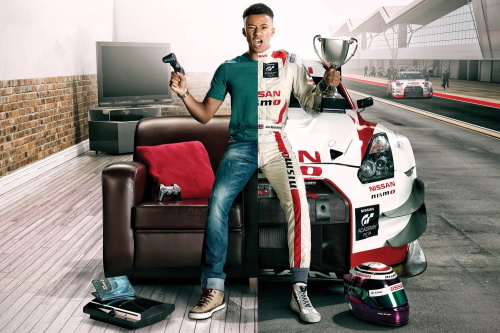
Jann Mardenborough remains the most iconic example of sim-to-real transition. In 2011, he won the GT Academy competition organized by Sony’s Gran Turismo and Nissan, beating over 90,000 participants worldwide. That victory earned him a place in Nissan’s professional driver development program. He went on to compete in GP3, Super Formula, and the 24 Hours of Le Mans. His story—later adapted into a feature film—proved on a global stage that elite sim racers could become legitimate professional drivers.
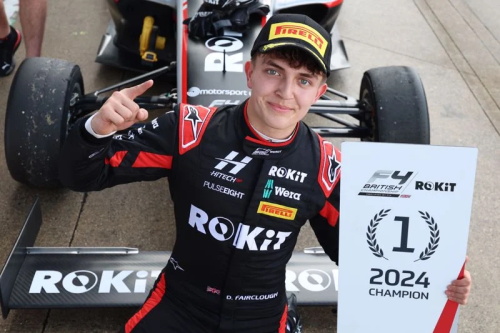
A more recent and systematic example is Deagan Fairclough. Training on a home simulator, he won the ROKiT Racing Star esports competition in 2022, earning a fully funded seat in the 2023 British F4 Championship. This prize eliminated the single biggest barrier in junior racing: funding. Fairclough capitalized on the opportunity, winning the British F4 title in 2024 and progressing to the GB3 Championship in 2025. He is now a professional single-seater driver with Hitech GP.
Conclusion: A New Gateway to Motorsport
Sim racing has built a viable pathway from enthusiast to esports professional—and onward to real-world racing. It is no longer just a game, but a serious competitive discipline, a powerful training platform, and an effective talent filter for the motorsport industry.
As teams, manufacturers, and star drivers increasingly invest in structured support programs, sim racing is likely to become the most important entry point into professional racing. For a sport long defined by exclusivity and cost, this shift represents a quiet revolution.
Sim racing is not replacing real racing. It is redefining how the next generation gets there.
FAQs
Is sim racing a reliable path to becoming a professional driver?
Sim racing can serve as an entry point, but it rarely replaces traditional pathways. Most drivers still need to progress through academies, testing programs, and junior racing series.
How much does a professional sim racing setup cost?
High-end sim racing setups can range from a few thousand dollars to well over $50,000, depending on hardware, motion systems, and software.
Do Formula 1 drivers train using simulators?
Yes. Drivers in Formula 1 rely heavily on simulators for track preparation, strategy testing, and setup development.
What is the biggest challenge when moving from sim racing to real racing?
The biggest challenge is adapting to physical sensations—such as G-forces, tire feedback, and real-world risk—which cannot be fully replicated in simulators.
Are sim racing esports competitions taken seriously?
Yes. Top-level competitions are highly structured and competitive, with professional teams, sponsorships, and talent scouting systems.
References
- BBC Sport – From gaming to Le Mans: How sim racing creates real drivers
- The Guardian – Can esports drivers really become Formula One racers?
- iRacing.com – The science behind sim racing realism
- Motorsport.com – Jann Mardenborough: from PlayStation to Le Mans
- Autosport – Deagan Fairclough and the new esports-funded racing career
About the Author
Adrian Cole is a motorsport analyst and sim racing coach with experience working alongside amateur and semi-professional drivers. He specializes in driver development, racing simulation technology, and the evolving relationship between esports and traditional motorsport.
Having spent years analyzing performance data and training workflows in both virtual and real-world environments, his work focuses on how emerging technologies are reshaping access to professional racing.
Editorial Transparency Statement
This article is based on a synthesis of publicly available information from reputable motorsport media, industry reports, and official sources. While every effort has been made to ensure accuracy, some insights are derived from industry trends and expert analysis rather than directly published statistics.
The editorial goal is to provide a balanced, research-informed perspective on the evolving role of sim racing in professional motorsport.
Disclaimer
This content is intended for informational and educational purposes only. It does not constitute professional motorsport, training, or career advice. Opportunities and outcomes in racing may vary significantly depending on individual circumstances, resources, and performance.
=======
By Adrian Cole | Updated on April 15, 2026 | 🕓 12 min read
Key Highlights
- Can sim racing really lead to a professional motorsport career?
- Why are Formula 1 teams increasingly dependent on simulators?
- How realistic are modern sim racing platforms compared to real cars?
- What skills transfer from virtual racing to real-world competition?
- Why do some sim racers struggle when transitioning to real racing?
For a long time, sim racing was dismissed as nothing more than a "game.It was seen as digital entertainment-something young people enjoyed in front of screens, worlds apart from the high-risk, high-cost, and highly professional realm of real-world motorsport. Competitive racing, after all, was defined by roaring engines, physical danger, and enormous financial barriers. Sim racing appeared to belong to an entirely different universe.
Over the past decade, however, that perception has changed fundamentally.
Driven by rapid advances in computing power, physics engines, virtual reality, artificial intelligence, and embodied intelligence systems, sim racing has moved closer to reality than ever before. It is no longer simply "racing that looks realistic,but a sophisticated digital environment that increasingly mirrors real motorsport in vehicle dynamics, tire behavior, track conditions, and strategic decision-making.
More importantly, sim racing is no longer operating at the margins of the sport. It has become deeply integrated into professional racing ecosystems-reshaping how drivers are trained, how teams develop cars, and how new talent is identified. What was once a hobby is now emerging as a genuine talent reservoir for real-world racing.
From "Video Gameto High-Fidelity Simulation
Racing games have always been one of the most popular genres in gaming history. Yet for many years, there was a clear gap between games and professional motorsport. Early titles prioritized visual spectacle and accessibility, simplifying physics and vehicle behavior. Track environments lacked precision, and player performance had little relevance outside the virtual world.
That gap has narrowed dramatically.
Modern simulation platforms such as iRacing, rFactor 2, and Assetto Corsa were built with realism-not entertainment-as their core design philosophy. Vehicle models are constructed using real engineering data. Tire wear, temperature windows, grip degradation, and load sensitivity are calculated dynamically. Tracks are created using LiDAR laser scanning, capturing surface undulations, camber changes, and even curb geometry with astonishing accuracy.
The result is not just a "realistic game,but a functional training environment.
Drivers are no longer just playing-they are learning racecraft, experimenting with setups, and making decisions under pressure in ways that closely resemble real-world competition.
Sim Racing Competitions as Talent Filters
Once the technology reached a sufficient level of realism, competitive structures naturally followed.
In recent years, high-level sim racing competitions such as the iRacing World Championship, the Virtual Le Mans Series, and official Formula 1 Esports events have grown into fully professionalized championships. These are no longer casual online races. They feature strict sporting regulations, long seasons, and an intensity comparable to many junior single-seater categories.
Success in these competitions demands far more than fast reflexes. Drivers must understand race strategy, tire management, fuel saving, overtaking psychology, and car setup-skills that translate directly to real motorsport.
This creates something motorsport has traditionally lacked:
a scalable, low-cost talent identification system
Young drivers who could never afford karting programs or junior formulas can now demonstrate their ability in a measurable, repeatable, and highly competitive environment.
Even elite drivers have acknowledged this shift.
Max Verstappen is a well-known sim racing enthusiast and has publicly supported the idea that virtual racing can reveal real talent. He has publicly stated his desire to help top sim racers transition into real-world racing, lending credibility to the idea that virtual performance can signal genuine potential.
However, the transition from sim racing to professional motorsport is rarely immediate.
In most cases, sim racing does not replace traditional development pathways-it integrates into them. A more typical progression looks like this:
sim racing esports competition driver academy or testing opportunities junior series professional racing
Sim racing acts as an entry point, helping drivers gain visibility and prove their potential. From there, structured programs, scouting systems, and development teams play a critical role in bridging the gap to real-world competition.

Why Professional Teams Depend on Simulators
For professional racing teams, sim racing is no longer about discovering talent alone-it is a core operational necessity.
In modern motorsport, especially Formula 1, real-world testing is severely restricted. Track time is limited, wind tunnel hours are capped, and every kilometer of running carries enormous cost. Real-world testing can cost thousands of euros per kilometer when factoring in logistics, tire wear, and operational expenses.
By contrast, simulator-based training costs a fraction-often estimated at around one-twentieth of real-world testing expenses. Teams can complete 700% of their strategic preparation in simulators, saving hundreds of millions of euros over multiple seasons.
Today, nearly every professional team-from established manufacturers to new F1 entrants such as Cadillac-relies heavily on simulators. Engineers use them to test setup variations, aerodynamic concepts, and tire strategies before committing resources to physical development. Drivers use them to learn circuits, rehearse race scenarios, and refine their driving style.
Millimeter-Level Accuracy and Competitive Advantage
At the top level, simulator fidelity has reached astonishing precision.
Formula 1 teams maintain digital replicas of all 23 race circuits, built using laser-scanned data. Surface irregularities, elevation changes, curb profiles, and grip variations are all translated into computational models. Real-world telemetry feeds back into the simulator continuously, allowing engineers to model complex variables such as brake degradation in high temperatures or tire wear rates in wet conditions.
This precision directly influences results on track.
During the 2023 Saudi Arabian Grand Prix, Red Bull driver Sergio Pérez used the team's simulator extensively to adapt to the unique challenges of racing under artificial lights. By rehearsing visual cues and reflection patterns in advance, he entered the race with a critical advantage. The difference between his simulated lap times and real race performance was reportedly extremely close-an extraordinary level of accuracy that helped secure victory.
In this context, simulators are no longer secondary tools. They are effectively an additional racetrack.
The Rise of the "Motorsport + EsportsBusiness Model
As sim racing became embedded in professional racing operations, its commercial potential also became clear.
Virtual Grands Prix and official esports championships have demonstrated that sim racing can sustain fan engagement, even when real-world events are disrupted. More importantly, they offer motorsport organizations a scalable, standalone ecosystem that operates independently of physical constraints.
This "motorsport + esportsdual-engine model allows elite racing IPs-especially Formula 1-to expand beyond traditional audiences. Esports lowers the entry barrier for fans, attracts younger demographics, and creates a new pathway into the sport, both as spectators and participants.
For the industry, this is not merely marketing-it is structural expansion.
Why Sim Racing Produces Real Racing Skills
Sim racing works as a talent development tool because its core demands align closely with real racing fundamentals.
Whether virtual or physical, racing is ultimately about understanding lines, managing tires, conserving fuel, executing overtakes, defending positions, and responding to dynamic race conditions. Top sim racers often develop a deep technical understanding of vehicle behavior and setup adjustments-sometimes rivaling junior engineers in their analytical approach.
Compared to traditional karting-based pathways, sim racing dramatically reduces economic and physical risk. It also enables an unprecedented volume of practice. With detailed telemetry available after every session, drivers can analyze inputs frame by frame, optimizing braking points, steering angles, and throttle application.
This data-driven learning environment accelerates skill development in ways that traditional training cannot easily match.
Not All Sim Racers Succeed
While success stories attract attention, the transition from simulation to real-world racing is far from guaranteed.
Some highly skilled sim racers struggle when stepping into physical race cars. The reasons are often complex and overlapping:
- Physical adaptation: Real racing involves sustained G-forces, heat, and fatigue that simulators cannot fully replicate.
- Tire feedback differences: Understanding grip through physical sensation-rather than visual cues-requires a different skill set.
- Psychological pressure: The presence of real risk, financial stakes, and competition environments introduces a level of stress that simulation cannot reproduce.
As a result, sim racing should not be viewed as a shortcut to professional motorsport, but rather as a complementary training and talent identification tool.
The most successful drivers are typically those who can combine virtual experience with real-world adaptation.
From Simulation to Reality: Proven Case Studies

Jann Mardenborough remains the most iconic example of sim-to-real transition. In 2011, he won the GT Academy competition organized by Sony's Gran Turismo and Nissan, beating over 90,000 participants worldwide. That victory earned him a place in Nissan's professional driver development program. He went on to compete in GP3, Super Formula, and the 24 Hours of Le Mans. His story-later adapted into a feature film-proved on a global stage that elite sim racers could become legitimate professional drivers.

A more recent and systematic example is Deagan Fairclough. Training on a home simulator, he won the ROKiT Racing Star esports competition in 2022, earning a fully funded seat in the 2023 British F4 Championship. This prize eliminated the single biggest barrier in junior racing: funding. Fairclough capitalized on the opportunity, winning the British F4 title in 2024 and progressing to the GB3 Championship in 2025. He is now a professional single-seater driver with Hitech GP.
Conclusion: A New Gateway to Motorsport
Sim racing has built a viable pathway from enthusiast to esports professional-and onward to real-world racing. It is no longer just a game, but a serious competitive discipline, a powerful training platform, and an effective talent filter for the motorsport industry.
As teams, manufacturers, and star drivers increasingly invest in structured support programs, sim racing is likely to become the most important entry point into professional racing. For a sport long defined by exclusivity and cost, this shift represents a quiet revolution.
Sim racing is not replacing real racing. It is redefining how the next generation gets there.
FAQs
Is sim racing a reliable path to becoming a professional driver?
Sim racing can serve as an entry point, but it rarely replaces traditional pathways. Most drivers still need to progress through academies, testing programs, and junior racing series.
How much does a professional sim racing setup cost?
High-end sim racing setups can range from a few thousand dollars to well over $50,000, depending on hardware, motion systems, and software.
Do Formula 1 drivers train using simulators?
Yes. Drivers in Formula 1 rely heavily on simulators for track preparation, strategy testing, and setup development.
What is the biggest challenge when moving from sim racing to real racing?
The biggest challenge is adapting to physical sensations-such as G-forces, tire feedback, and real-world risk-which cannot be fully replicated in simulators.
Are sim racing esports competitions taken seriously?
Yes. Top-level competitions are highly structured and competitive, with professional teams, sponsorships, and talent scouting systems.
References
- BBC Sport From gaming to Le Mans: How sim racing creates real drivers
- The Guardian Can esports drivers really become Formula One racers?
- iRacing.com The science behind sim racing realism
- Motorsport.com Jann Mardenborough: from PlayStation to Le Mans
- Autosport Deagan Fairclough and the new esports-funded racing career
About the Author
Adrian Cole is a motorsport analyst and sim racing coach with experience working alongside amateur and semi-professional drivers. He specializes in driver development, racing simulation technology, and the evolving relationship between esports and traditional motorsport.
Having spent years analyzing performance data and training workflows in both virtual and real-world environments, his work focuses on how emerging technologies are reshaping access to professional racing.
Editorial Transparency Statement
This article is based on a synthesis of publicly available information from reputable motorsport media, industry reports, and official sources. While every effort has been made to ensure accuracy, some insights are derived from industry trends and expert analysis rather than directly published statistics.
The editorial goal is to provide a balanced, research-informed perspective on the evolving role of sim racing in professional motorsport.
Disclaimer
This content is intended for informational and educational purposes only. It does not constitute professional motorsport, training, or career advice. Opportunities and outcomes in racing may vary significantly depending on individual circumstances, resources, and performance.
>>>>>>> 63583bcf2d1c48866d6cb09279ca425cc19a4907 =======
 >>>>>>> 63583bcf2d1c48866d6cb09279ca425cc19a4907
The Rise of Pickleball and Small-Court Sports: Why Racquet Games Are Becoming Faster, Smaller, and More Social
=======
>>>>>>> 63583bcf2d1c48866d6cb09279ca425cc19a4907
LA28 Olympics: Why Squash, Flag Football, and Cricket Are Shaping the Future of the Games
=======
>>>>>>> 63583bcf2d1c48866d6cb09279ca425cc19a4907
From Niche to Mainstream: The Explosive Growth of Competitive Climbing and Sport Climbing
=======
>>>>>>> 63583bcf2d1c48866d6cb09279ca425cc19a4907
Is Adventure Racing the Next Big Outdoor Trend in Asia?