
 =======
 >>>>>>> 63583bcf2d1c48866d6cb09279ca425cc19a4907



Market Value, Potential, and the New Logic of Modern Football
By Alejandro Morales | Updated on March 24, 2026 | 🕓10–12 minutes
Key Highlights
- Who is currently the most valuable U21 player in world football?
- Why has Lamine Yamal reached a €200M valuation at such a young age?
- How do different systems (Transfermarkt vs. CIES) evaluate player market value differently?
- Which U21 players are rising fastest in Europe’s top leagues?
- Why are young defenders becoming increasingly valuable in the transfer market?
As the 2026 transfer market approaches, discussions surrounding the world’s most valuable U21 players have already become one of the most compelling topics in global football. It is important to clarify from the outset that there is currently no single “official” or universally accepted ranking system. Different evaluation frameworks—such as market value, projected transfer fee, sporting impact, or commercial appeal—often produce vastly different results.
The figures referenced in this article are based on Transfermarkt data as of December 30, 2025, combined with contextual analysis of on-field performance, tactical importance, positional scarcity, and club strategy. In modern football, a young player’s value is no longer determined solely by current ability; it is increasingly a form of forward pricing on future peak performance.
I. Redefining the Ceiling: Lamine Yamal
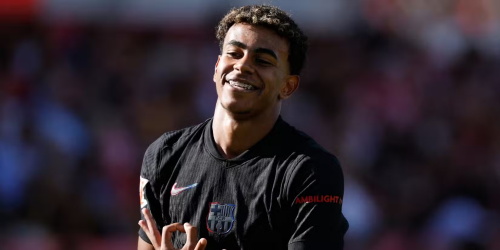
Barcelona | La Liga | Age: 18 | Market Value: €200 million
At just 18 years old, Lamine Yamal has already reached the summit of global transfer valuations. Transfermarkt’s €200 million estimate does not merely set a new benchmark for teenage players—it fundamentally reshapes how elite young attackers are priced.
Yamal’s rise is not driven by physical dominance or isolated moments of brilliance, but by a level of composure and tactical maturity rarely seen at such an age. At Barcelona—a club whose possession-based system exposes any lack of confidence or decisiveness—young wingers often struggle to establish themselves. Yamal, however, has thrived.
He actively demands the ball, drives play forward under pressure, and consistently assumes responsibility in decisive moments. Nominally a winger, Yamal defies positional constraints. He can cut inside to operate as a “false No.10,” orchestrating attacks through central spaces, or hug the touchline to dismantle defenses with traditional wide play. This positional flexibility, combined with elite dribbling, creativity, and end product, makes him a dream profile for any top-level coach.
His individual accolades reinforce that status. At the Global Soccer Awards, Yamal won La Liga Best U23 Player, Best Forward, and the Maradona Award, becoming the youngest triple winner in the event’s history. While Barcelona have no intention of selling their prized academy product, market logic inevitably places him in the same valuation tier as generational superstars like Mbappé and Haaland. As a result, hypothetical figures exceeding €300 million are frequently cited when discussing his potential transfer value.
II. System Synergy and Explosive Growth: Désiré Doué
Paris Saint-Germain | Ligue 1 | Age: 20 | Market Value: €90 million
If Yamal represents irreplaceable individual genius, Désiré Doué exemplifies how talent flourishes within the right system. The 2025 Golden Boy winner has emerged as one of Europe’s most complete young attackers.
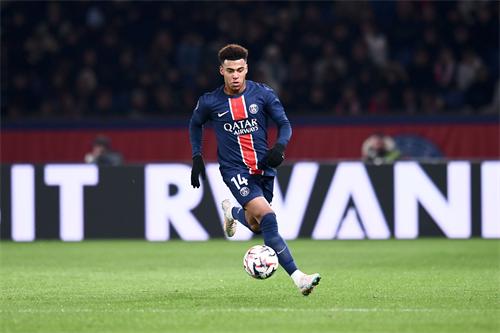
During the 2024–25 season, Doué made 61 appearances for Paris Saint-Germain, producing 16 goals and 16 assists across all competitions—a total of 32 direct goal contributions. His individual breakout coincided with extraordinary team success, as PSG secured the Ligue 1 title, Coupe de France, UEFA Champions League, and UEFA Super Cup.
Beyond raw numbers, Doué completed his senior debut for the French national team and accumulated a remarkable list of honors, including Ligue 1 Young Player of the Year, Champions League Young Player of the Season, and inclusion in multiple best XI selections.
Technically, Doué is defined by balance and versatility. He possesses exceptional agility, a low center of gravity, strong acceleration, and ambidextrous finishing ability. His close control under pressure and ability to maneuver in congested areas have drawn comparisons from French media to Neymar at a similar stage of development. At just 20 years old, Doué already appears destined to cross the €100 million threshold, with the potential to reach heights comparable to France’s greatest modern attackers.
III. The Premium on Control: Arda Güler
Real Madrid | La Liga | Age: 20 | Market Value: €90 million
Earning a meaningful role at Real Madrid at such a young age is itself a powerful endorsement of value. Arda Güler’s rapid rise is driven by his ability to dictate tempo and structure in midfield—qualities increasingly prized in modern football.

Güler boasts a 91% passing accuracy and a through-ball success rate of approximately 78%, both significantly above league averages. Yet his greatest impact often lies beyond statistics. He improves the collective rhythm of the team, linking phases of play and enabling fluid attacking transitions.
Transfermarkt’s valuation reflects not only his technical skill but also his tactical intelligence and adaptability within elite systems. Continued development in goal contributions would further solidify his standing among Europe’s top midfielders in the same valuation bracket.
IV. Premier League Valuation Logic: Estêvão Willian
Chelsea | Premier League | Age: 18 | Market Value: €80 million
As part of Chelsea’s long-term youth-focused strategy, Estêvão Willian has quickly become one of the Premier League’s most highly valued teenage attackers. At 18, his €80 million valuation reflects both performance and strategic faith.
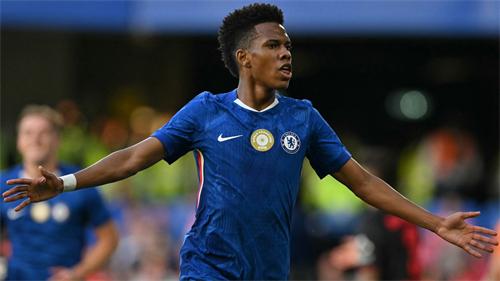
He adapted rapidly to the Premier League’s physical intensity, recording 5 goals and 1 assist in 20 appearances during his debut season. His defining moment came against Liverpool, where he scored a dramatic late winner—an early demonstration of composure under pressure.
Statistically, Estêvão contributes 2.1 key passes per match with a 68% dribble success rate, underlining his ability to create as well as finish. More than a pure scorer, he embodies the profile of the modern attacking playmaker-forward hybrid.
V. The Rise of Elite Young Defenders

Pau Cubarsí
Barcelona | Age: 18 | Market Value: €80 million
Few central defenders establish themselves at elite level as teenagers, yet Cubarsí has already become a regular starter for Barcelona. Known for composure, ball progression, and positional awareness, he consistently records over 90% pass completion and excels in one-on-one defending. Internally, he is viewed as a future defensive leader, often compared stylistically to Gerard Piqué.
Dean Huijsen
Real Madrid | Age: 20 | Market Value: €70 million
Huijsen’s move to Real Madrid broke the club’s historic transfer record for a defender. Standing tall, comfortable with both feet, and capable of long-range distribution, he combines Premier League physicality with La Liga ball-playing demands. His 80.5% interception success rate highlights elite defensive anticipation.
Leny Yoro
Manchester United | Age: 20 | Market Value: €55 million
Yoro represents a more volatile development curve. After impressing early with maturity beyond his years, his recent form has fluctuated. Nevertheless, Manchester United consider this inconsistency a normal stage in the growth of a high-ceiling defender, and his long-term potential remains substantial.
VI. Versatility, Risk, and Strategic Investment
Players such as Kenan Yıldız (€75 million), Lennart Karl (€60 million), Franco Mastantuono (€50 million), and Warren Zaïre-Emery (€50 million) illustrate different investment profiles. Whether it is Yıldız’s positional flexibility, Karl’s early breakout at Bayern Munich, Mastantuono’s South American technical elegance, or Zaïre-Emery’s midfield authority at PSG, each represents a calculated bet on future dominance rather than immediate output.
Conclusion: U21 Valuations Are Bets on the Future
The 2026 transfer market makes one truth unmistakably clear: the most expensive commodity in football is not present ability, but certainty of future excellence. In an era defined by tactical complexity and financial scale, young players are valued as long-term assets whose peak years have yet to arrive.
These U21 players are not only the stars of tomorrow—they are the clearest reflection of how modern football assigns value, balances risk, and invests in potential.
Transfermarkt market values are based on a combination of data modeling, community assessment, and player performance. Other valuation systems (such as CIES) may produce different results, while actual transfer fees are often influenced by factors like contract length, club strategy, and player preference—meaning they can differ significantly from estimated values.
FAQs
1. Is Transfermarkt market value the same as a player’s transfer fee?
No. Transfermarkt values are estimates based on performance, age, and market trends, while actual transfer fees depend on negotiations, contracts, and club strategies.
2. Why do different platforms give different valuations for the same player?
Because they use different models. For example, CIES Football Observatory uses statistical prediction models, while Transfermarkt includes community input and market sentiment.
3. Can a U21 player really be worth €200 million?
Yes in theory, but this reflects projected potential and strategic value rather than a guaranteed transfer price.
4. Why are young players so expensive in modern football?
Clubs are investing in long-term assets. Younger players offer resale value, adaptability, and longer peak performance windows.
5. Which position sees the fastest value growth among U21 players?
Attacking players still dominate, but ball-playing defenders and versatile midfielders are rapidly increasing in value.
References
- Transfermarkt – Player market values, transfer history, contract data, and age-based valuation trends.
- CIES Football Observatory – Independent football transfer value models and market analysis reports.
- FIFA Global Transfer Report – Annual overview of international transfer spending and age trends.
- UEFA Technical Reports – Tactical and performance insights from elite European competitions.
- The Athletic – In-depth player profiles, scouting reports, and transfer market analysis.
- StatsBomb / Opta Analyst – Advanced football data, tactical metrics, and performance analytics.
About the Author
Alejandro Morales
Alejandro Morales is an independent football analyst and long-form sports writer specializing in transfer markets, player valuation models, and European football systems. His work focuses on interpreting data from platforms such as Transfermarkt and CIES Football Observatory to explain how modern clubs assess risk, potential, and long-term investment in players.
Editorial Transparency Statement
This article is based on publicly available data from recognized football analytics platforms, including Transfermarkt and CIES Football Observatory.
All player valuations reflect estimates as of late 2025 and are used for analytical and informational purposes only. The analysis incorporates a combination of statistical data, publicly reported performance metrics, and general industry knowledge. No confidential or insider information has been used.
Disclaimer
This content is intended for informational and editorial purposes only and does not constitute financial, contractual, or professional sports advice.
Player market values, transfer projections, and performance assessments are inherently uncertain and subject to change due to factors including form, injuries, contract conditions, and club decisions. Readers should not interpret any valuation as a definitive or guaranteed transfer outcome.
=======
Market Value, Potential, and the New Logic of Modern Football
By Alejandro Morales | Updated on March 24, 2026 | 🕓102 minutes
Key Highlights
- Who is currently the most valuable U21 player in world football?
- Why has Lamine Yamal reached a 00M valuation at such a young age?
- How do different systems (Transfermarkt vs. CIES) evaluate player market value differently?
- Which U21 players are rising fastest in Europe's top leagues?
- Why are young defenders becoming increasingly valuable in the transfer market?
As the 2026 transfer market approaches, discussions surrounding the world's most valuable U21 players have already become one of the most compelling topics in global football. It is important to clarify from the outset that there is currently no single "officialor universally accepted ranking system. Different evaluation frameworks-such as market value, projected transfer fee, sporting impact, or commercial appeal-often produce vastly different results.
The figures referenced in this article are based on Transfermarkt data as of December 30, 2025, combined with contextual analysis of on-field performance, tactical importance, positional scarcity, and club strategy. In modern football, a young player's value is no longer determined solely by current ability; it is increasingly a form of forward pricing on future peak performance.
I. Redefining the Ceiling: Lamine Yamal
Barcelona | La Liga | Age: 18 | Market Value: 00 million
At just 18 years old, Lamine Yamal has already reached the summit of global transfer valuations. Transfermarkt's 00 million estimate does not merely set a new benchmark for teenage players-it fundamentally reshapes how elite young attackers are priced.
Yamal's rise is not driven by physical dominance or isolated moments of brilliance, but by a level of composure and tactical maturity rarely seen at such an age. At Barcelona-a club whose possession-based system exposes any lack of confidence or decisiveness-young wingers often struggle to establish themselves. Yamal, however, has thrived.
He actively demands the ball, drives play forward under pressure, and consistently assumes responsibility in decisive moments. Nominally a winger, Yamal defies positional constraints. He can cut inside to operate as a "false No.10,orchestrating attacks through central spaces, or hug the touchline to dismantle defenses with traditional wide play. This positional flexibility, combined with elite dribbling, creativity, and end product, makes him a dream profile for any top-level coach.
His individual accolades reinforce that status. At the Global Soccer Awards, Yamal won La Liga Best U23 Player, Best Forward, and the Maradona Award, becoming the youngest triple winner in the event's history. While Barcelona have no intention of selling their prized academy product, market logic inevitably places him in the same valuation tier as generational superstars like Mbappé and Haaland. As a result, hypothetical figures exceeding 00 million are frequently cited when discussing his potential transfer value.
II. System Synergy and Explosive Growth: Désiré Doué
Paris Saint-Germain | Ligue 1 | Age: 20 | Market Value: 0 million
If Yamal represents irreplaceable individual genius, Désiré Doué exemplifies how talent flourishes within the right system. The 2025 Golden Boy winner has emerged as one of Europe's most complete young attackers.

During the 20245 season, Doué made 61 appearances for Paris Saint-Germain, producing 16 goals and 16 assists across all competitions-a total of 32 direct goal contributions. His individual breakout coincided with extraordinary team success, as PSG secured the Ligue 1 title, Coupe de France, UEFA Champions League, and UEFA Super Cup.
Beyond raw numbers, Doué completed his senior debut for the French national team and accumulated a remarkable list of honors, including Ligue 1 Young Player of the Year, Champions League Young Player of the Season, and inclusion in multiple best XI selections.
Technically, Doué is defined by balance and versatility. He possesses exceptional agility, a low center of gravity, strong acceleration, and ambidextrous finishing ability. His close control under pressure and ability to maneuver in congested areas have drawn comparisons from French media to Neymar at a similar stage of development. At just 20 years old, Doué already appears destined to cross the 00 million threshold, with the potential to reach heights comparable to France's greatest modern attackers.
III. The Premium on Control: Arda Güler
Real Madrid | La Liga | Age: 20 | Market Value: 0 million
Earning a meaningful role at Real Madrid at such a young age is itself a powerful endorsement of value. Arda Güler's rapid rise is driven by his ability to dictate tempo and structure in midfield-qualities increasingly prized in modern football.

Güler boasts a 91% passing accuracy and a through-ball success rate of approximately 78%, both significantly above league averages. Yet his greatest impact often lies beyond statistics. He improves the collective rhythm of the team, linking phases of play and enabling fluid attacking transitions.
Transfermarkt's valuation reflects not only his technical skill but also his tactical intelligence and adaptability within elite systems. Continued development in goal contributions would further solidify his standing among Europe's top midfielders in the same valuation bracket.
IV. Premier League Valuation Logic: Estêvão Willian
Chelsea | Premier League | Age: 18 | Market Value: 0 million
As part of Chelsea's long-term youth-focused strategy, Estêvão Willian has quickly become one of the Premier League's most highly valued teenage attackers. At 18, his 0 million valuation reflects both performance and strategic faith.

He adapted rapidly to the Premier League's physical intensity, recording 5 goals and 1 assist in 20 appearances during his debut season. His defining moment came against Liverpool, where he scored a dramatic late winner-an early demonstration of composure under pressure.
Statistically, Estêvão contributes 2.1 key passes per match with a 68% dribble success rate, underlining his ability to create as well as finish. More than a pure scorer, he embodies the profile of the modern attacking playmaker-forward hybrid.
V. The Rise of Elite Young Defenders

Pau Cubarsí
Barcelona | Age: 18 | Market Value: 0 million
Few central defenders establish themselves at elite level as teenagers, yet Cubarsí has already become a regular starter for Barcelona. Known for composure, ball progression, and positional awareness, he consistently records over 90% pass completion and excels in one-on-one defending. Internally, he is viewed as a future defensive leader, often compared stylistically to Gerard Piqué.
Dean Huijsen
Real Madrid | Age: 20 | Market Value: 0 million
Huijsen's move to Real Madrid broke the club's historic transfer record for a defender. Standing tall, comfortable with both feet, and capable of long-range distribution, he combines Premier League physicality with La Liga ball-playing demands. His 80.5% interception success rate highlights elite defensive anticipation.
Leny Yoro
Manchester United | Age: 20 | Market Value: 5 million
Yoro represents a more volatile development curve. After impressing early with maturity beyond his years, his recent form has fluctuated. Nevertheless, Manchester United consider this inconsistency a normal stage in the growth of a high-ceiling defender, and his long-term potential remains substantial.
VI. Versatility, Risk, and Strategic Investment
Players such as Kenan Yıldız (5 million), Lennart Karl (0 million), Franco Mastantuono (0 million), and Warren Zaïre-Emery (0 million) illustrate different investment profiles. Whether it is Yıldız's positional flexibility, Karl's early breakout at Bayern Munich, Mastantuono's South American technical elegance, or Zaïre-Emery's midfield authority at PSG, each represents a calculated bet on future dominance rather than immediate output.
Conclusion: U21 Valuations Are Bets on the Future
The 2026 transfer market makes one truth unmistakably clear: the most expensive commodity in football is not present ability, but certainty of future excellence. In an era defined by tactical complexity and financial scale, young players are valued as long-term assets whose peak years have yet to arrive.
These U21 players are not only the stars of tomorrow-they are the clearest reflection of how modern football assigns value, balances risk, and invests in potential.
Transfermarkt market values are based on a combination of data modeling, community assessment, and player performance. Other valuation systems (such as CIES) may produce different results, while actual transfer fees are often influenced by factors like contract length, club strategy, and player preference-meaning they can differ significantly from estimated values.
FAQs
1. Is Transfermarkt market value the same as a player's transfer fee?
No. Transfermarkt values are estimates based on performance, age, and market trends, while actual transfer fees depend on negotiations, contracts, and club strategies.
2. Why do different platforms give different valuations for the same player?
Because they use different models. For example, CIES Football Observatory uses statistical prediction models, while Transfermarkt includes community input and market sentiment.
3. Can a U21 player really be worth 00 million?
Yes in theory, but this reflects projected potential and strategic value rather than a guaranteed transfer price.
4. Why are young players so expensive in modern football?
Clubs are investing in long-term assets. Younger players offer resale value, adaptability, and longer peak performance windows.
5. Which position sees the fastest value growth among U21 players?
Attacking players still dominate, but ball-playing defenders and versatile midfielders are rapidly increasing in value.
References
- Transfermarkt Player market values, transfer history, contract data, and age-based valuation trends.
- CIES Football Observatory Independent football transfer value models and market analysis reports.
- FIFA Global Transfer Report Annual overview of international transfer spending and age trends.
- UEFA Technical Reports Tactical and performance insights from elite European competitions.
- The Athletic In-depth player profiles, scouting reports, and transfer market analysis.
- StatsBomb / Opta Analyst Advanced football data, tactical metrics, and performance analytics.
About the Author
Alejandro Morales
Alejandro Morales is an independent football analyst and long-form sports writer specializing in transfer markets, player valuation models, and European football systems. His work focuses on interpreting data from platforms such as Transfermarkt and CIES Football Observatory to explain how modern clubs assess risk, potential, and long-term investment in players.
Editorial Transparency Statement
This article is based on publicly available data from recognized football analytics platforms, including Transfermarkt and CIES Football Observatory.
All player valuations reflect estimates as of late 2025 and are used for analytical and informational purposes only. The analysis incorporates a combination of statistical data, publicly reported performance metrics, and general industry knowledge. No confidential or insider information has been used.
Disclaimer
This content is intended for informational and editorial purposes only and does not constitute financial, contractual, or professional sports advice.
Player market values, transfer projections, and performance assessments are inherently uncertain and subject to change due to factors including form, injuries, contract conditions, and club decisions. Readers should not interpret any valuation as a definitive or guaranteed transfer outcome.
>>>>>>> 63583bcf2d1c48866d6cb09279ca425cc19a4907 =======
 >>>>>>> 63583bcf2d1c48866d6cb09279ca425cc19a4907
The Rise of Pickleball and Small-Court Sports: Why Racquet Games Are Becoming Faster, Smaller, and More Social
=======
>>>>>>> 63583bcf2d1c48866d6cb09279ca425cc19a4907
LA28 Olympics: Why Squash, Flag Football, and Cricket Are Shaping the Future of the Games
=======
>>>>>>> 63583bcf2d1c48866d6cb09279ca425cc19a4907
From Niche to Mainstream: The Explosive Growth of Competitive Climbing and Sport Climbing
=======
>>>>>>> 63583bcf2d1c48866d6cb09279ca425cc19a4907
Is Adventure Racing the Next Big Outdoor Trend in Asia?