
 =======
 >>>>>>> 63583bcf2d1c48866d6cb09279ca425cc19a4907



By Michael Thompson | Updated on April 9, 2026 | 🕓 12 minutes
Key Highlights
- Defensive Versatility Explained
- The Role of Switching in Modern Defenses
- Analytics Behind Defensive Performance
- Player Comparisons in Defensive Systems
In today’s NBA, defense is no longer just about effort, attitude, or raw toughness. It has evolved into a highly structured, system-driven, and scalable discipline. The core of this evolution? Defensive versatility. For championship-contending teams, having players who can defend in multiple ways has become one of the most valuable assets a player can possess. In fact, a truly versatile defender can rival—or even surpass—the strategic value of an elite scorer.
As spacing increases, offensive roles become more modular, and playoff matchups grow increasingly complex, teams can no longer survive with players who excel in only one defensive context. Instead, they need players who can seamlessly shift between defensive assignments, read the game in real-time, and adjust the geometry of play on the fly. Defensive versatility is no longer a luxury—it’s the foundation upon which elite teams are built.
The Essence of Defensive Versatility: From Reaction to Control
At its core, defensive versatility is about more than just guarding multiple positions. It's about controlling space rather than reacting to it. A versatile defender can change roles possession by possession: applying on-ball pressure on the perimeter, rotating to protect the rim from the weak side, navigating screens without losing team structure, and quickly converting defensive stops into transition offense.
Modern basketball has revealed a simple truth: the best offensive possessions often start with elite defensive plays. A perfectly timed rotation, a deflection in the passing lane, or a contest at the rim can immediately generate fast-break opportunities—arguably the most efficient scoring chance in basketball.
Players like Herbert Jones exemplify this principle. His value isn’t just in limiting opponents to a three-point shooting percentage of 30.1%. His true impact comes from his relentless defensive pressure, forcing rushed decisions, creating turnovers, and giving his team easy scoring opportunities without relying on half-court offense.
Comparing Defensive Versatility vs. Specialized Defenders
Defensive versatility’s advantages are becoming increasingly evident, especially with the rise of more dynamic and diverse offensive strategies. In the past, teams could rely on specialists—like a “defensive stopper” or a traditional “big man” focused solely on protecting the rim. But in the current era, teams built around defensive versatility are better equipped to face complex offensive schemes.
Take the example of the Phoenix Suns (2025-2026 season), whose offensive duo of Devin Booker and Kevin Durant raised their scoring efficiency in the playoffs. However, their defense often faced challenges. Compare that to the Golden State Warriors, who through a defense-heavy system (including extensive switching), ranked 5th in defensive efficiency during the 2025 playoffs. The Warriors' defensive scheme enabled them to handle multiple threats, whereas Phoenix, despite their firepower, struggled with their defensive system.
This comparison highlights how defensive versatility—more so than individual talent—can provide a more consistent competitive edge, especially against top-tier opponents.
Three Core Dimensions of Defensive Versatility
1. Multi-Positional Defensive Coverage
The first pillar of defensive versatility is the ability to guard multiple positions effectively, usually from point guard to power forward. This requires a blend of physical tools and basketball IQ—height, wingspan, lateral quickness, balance, and spatial awareness.
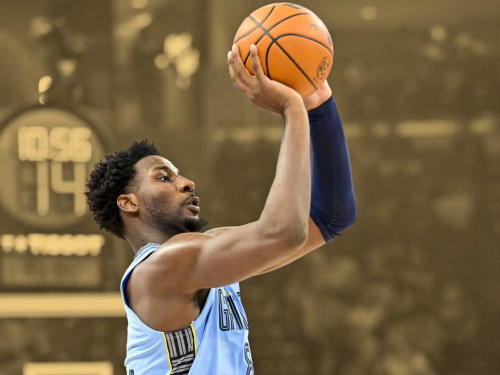
Jaren Jackson Jr. - Source: Basketball Network
A prime example of this is Jaren Jackson Jr. (Memphis Grizzlies), whose ability to defend both in the post and on the perimeter makes him one of the most valuable defenders in the game. His versatility comes not from dominating a single matchup but from being able to excel no matter who he’s guarding. This gives his team flexibility, enabling them to adapt to various matchups.
2. Balancing On-Ball Defense and Team Help
Great defense is never just individual. The second dimension of defensive versatility is the ability to maintain strong on-ball defense while simultaneously fitting into the team's help-defense system.
Kevin Durant’s defensive evolution is a perfect example. Early in his career, he was often criticized for being a defensive liability. But over time, especially during his time with the Golden State Warriors, he developed strong lateral movement and off-ball awareness. He became a key weak-side defender, disrupting passing lanes and contributing to his team’s overall defensive rating. This transformation shows that defensive versatility can be developed, and it can become a key asset in the right system.
3. Defensive Efficiency and Measurable Impact
Championship teams don’t just rely on a player’s reputation—they depend on results. Defensive versatility needs to translate into measurable efficiency: lower opponent field-goal percentages, reduced points per possession, and improved team defensive ratings.
Kawhi Leonard, for example, remains a gold standard of defensive versatility. His combination of length, hand speed, and footwork allows him to generate both steals and blocks while maintaining team integrity. What truly sets him apart is his decision-making—knowing when to gamble and when to stay disciplined. His consistent defensive performance is reflected in advanced metrics, especially Defensive Box Plus-Minus (DBPM), where he continues to rank among the league's elite defenders.
Switch Everything: The “Operating System Upgrade” of Modern Defense
Defensive versatility reaches its zenith in “switch-heavy” systems. Lineups that can switch across all five positions eliminate common offensive advantages like mismatches created by pick-and-rolls or off-ball screens.
A team that switches effectively removes weak links from the floor. Coaches can tailor defensive matchups on a possession-by-possession basis, knowing that multiple defenders can step up and apply pressure without fear of structural breakdowns. This is particularly critical for teams that employ skill-oriented centers rather than traditional rim protectors. In this case, a versatile forward—such as Scottie Barnes—becomes indispensable, capable of rotating to protect the rim while maintaining perimeter defense.
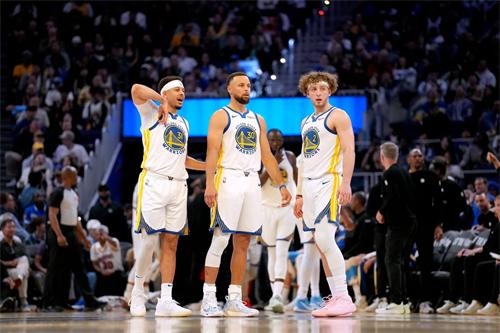
Source: Cary Edmondson / Imagn Images
The Golden State Warriors’ successful “switch everything” defense, especially during their championship runs, shows how effective this system can be. According to Second Spectrum and SportVU (NBA data providers), teams with a strong switching defense tend to have better success in mitigating offensive mismatches, especially against elite offensive teams.
How Championship Teams Develop Defensive Versatility
Defensive versatility is not an innate skill—it’s cultivated through system design, trust, and repetition under pressure.
The Golden State Warriors’ defensive system during their championship years is a prime example of this. Their emphasis on switching, rotational discipline, and understanding defensive responsibilities allowed players like Andre Iguodala and Draymond Green to maximize their defensive capabilities. The system didn’t just accommodate versatility—it demanded it.
Young players, in particular, benefit from such environments. By empowering them to take on multiple defensive roles instead of limiting them to a narrow focus, their growth accelerates. Game repetitions sharpen instincts, and mistakes become learning opportunities rather than reasons for reduced minutes.
Young Defensive Cores: A Common Thread Among Elite Teams
Recent championship teams have a common thread: they’re built around young, versatile defensive cores. Teams like the Oklahoma City Thunder (2025 playoffs) are a great example. With players like Lu Dort, Jalen Williams, Alex Caruso, and Cason Wallace—all under 26—the Thunder boasted the best perimeter defense in the league, allowing just 104.7 points per 100 possessions.
Boston Celtics also illustrate the importance of fostering a strong defensive culture. Second-year forward Jordan Walsh emerged as a key perimeter stopper during the 2025-26 season, while rookie Hugo González demonstrated rare defensive instincts. The Celtics' focus on developing versatile defenders has become a staple of their team-building philosophy.
A New Reality: Youth and Defense Are No Longer Opposites
In the 2024-2025 season, four of the top five defensive teams in the league—the Thunder, Magic, Rockets, and Grizzlies—had average roster ages under 25. This shatters the long-held belief that youth automatically leads to defensive inconsistency. With modern coaching, analytics, and player development systems, young players are becoming increasingly capable of playing versatile defensive roles.
Recent playoff runs further highlight this trend. Teams that lean too heavily on offensive firepower often hit a ceiling. In contrast, teams that anchor their identity in defensive efficiency—such as the Thunder, who ranked first defensively in 2025—can compete for championships even without a historically elite offense.
Conclusion: Defensive Versatility as the True Championship Foundation
In the modern NBA, teams are no longer building their rosters based solely on traditional positions. Instead, they are assembling toolkits: switching, rim protection, on-ball defense, and rotational intelligence. Defensive versatility binds these modules together, creating a cohesive, resilient defense that can weather any offensive storm.
While offensive firepower may get the headlines, defensive versatility is the real backbone of championship contention. It is the most reliable foundation for building a title-worthy team and the key trait that separates promising squads from true championship contenders.
FAQs
Q1: How does defensive versatility translate into tangible outcomes in games?
Defensive versatility enables a team to cover multiple defensive assignments without breaking down, increasing efficiency on both ends of the floor. For instance, a versatile defender can switch between defending the perimeter, protecting the rim, and intercepting passes, contributing to lower opponent field-goal percentages and creating transition opportunities.
Q2: What statistical metrics are used to measure defensive versatility?
Two key metrics are Defensive Box Plus-Minus (DBPM) and Defensive Rating (DRtg). DBPM evaluates a player’s defensive impact on a per-100-possession basis, and DRtg measures how many points a team allows per 100 possessions while a player is on the court. The best versatile defenders typically score high in both.
Q3: Can defensive versatility overcome a lack of offensive firepower?
Yes, teams with strong defensive versatility can often outperform high-scoring teams in the playoffs. This is because defense can neutralize offensive strategies, such as pick-and-rolls or post-ups, forcing opposing teams into inefficient scoring opportunities.
Q4: How do teams like the Golden State Warriors and Miami Heat use defensive versatility differently?
The Warriors have successfully employed a switching defense across all five positions, relying on players’ ability to adapt in real-time. In contrast, the Heat employ a more traditional defense with an emphasis on “packing the paint” and controlling inside scoring, which requires a different type of versatility, focusing on rim protection and weak-side help.
References
1. Bontemps, Tim. “Why Defensive Versatility Is the NBA’s Most Valuable Skill.” ESPN, ESPN Internet Ventures.
2. Cohen, Ben. “The NBA’s New Defensive Revolution: Switch Everything.” The Wall Street Journal, Dow Jones & Company.
3. Hollinger, John. “How Defense Wins Championships in the Modern NBA.” The Athletic, The Athletic Media Company.
4. Pina, Michael. “Why Switchable Defenders Are the NBA’s Most Valuable Asset.” Sports Illustrated, Minute Media.
5. NBA Data and Analytics from Second Spectrum and SportVU
About the Author
Michael Thompson is a seasoned basketball analyst and writer, specializing in defensive systems and advanced metrics. With over 10 years of experience in the sports industry, Michael has contributed extensively to major outlets such as ESPN, The Athletic, and Bleacher Report, providing in-depth analysis on team dynamics, player performance, and coaching strategies. He holds a Master’s degree in Sports Analytics from Columbia University and has worked closely with several NBA teams to assess defensive performance and strategy.
Michael is particularly known for his expertise in defensive analytics, and his work has been referenced by coaches, scouts, and analysts across the basketball community. He regularly speaks at basketball analytics conferences and is a trusted voice in understanding the evolution of defense in the NBA.
Editorial Transparency Statement
The content presented in this article is the result of thorough research and analysis conducted by the author. All statements and conclusions are based on publicly available data, credible sources, and expert opinions within the sports and basketball analysis industry. The article aims to provide accurate, well-researched insights and a balanced view of current trends in the NBA.
Disclaimer
The views expressed in this article are solely those of the author and do not necessarily reflect the opinions of the publisher or affiliated organizations. While every effort is made to ensure the accuracy of the information, the author and publisher are not responsible for any errors or omissions that may occur. The content is intended for informational purposes only and should not be considered as professional advice.
=======

By Michael Thompson | Updated on April 9, 2026 | 🕓 12 minutes
Key Highlights
- Defensive Versatility Explained
- The Role of Switching in Modern Defenses
- Analytics Behind Defensive Performance
- Player Comparisons in Defensive Systems
In today's NBA, defense is no longer just about effort, attitude, or raw toughness. It has evolved into a highly structured, system-driven, and scalable discipline. The core of this evolution? Defensive versatility. For championship-contending teams, having players who can defend in multiple ways has become one of the most valuable assets a player can possess. In fact, a truly versatile defender can rival-or even surpass-the strategic value of an elite scorer.
As spacing increases, offensive roles become more modular, and playoff matchups grow increasingly complex, teams can no longer survive with players who excel in only one defensive context. Instead, they need players who can seamlessly shift between defensive assignments, read the game in real-time, and adjust the geometry of play on the fly. Defensive versatility is no longer a luxury-it's the foundation upon which elite teams are built.
The Essence of Defensive Versatility: From Reaction to Control
At its core, defensive versatility is about more than just guarding multiple positions. It's about controlling space rather than reacting to it. A versatile defender can change roles possession by possession: applying on-ball pressure on the perimeter, rotating to protect the rim from the weak side, navigating screens without losing team structure, and quickly converting defensive stops into transition offense.
Modern basketball has revealed a simple truth: the best offensive possessions often start with elite defensive plays. A perfectly timed rotation, a deflection in the passing lane, or a contest at the rim can immediately generate fast-break opportunities-arguably the most efficient scoring chance in basketball.
Players like Herbert Jones exemplify this principle. His value isn't just in limiting opponents to a three-point shooting percentage of 30.1%. His true impact comes from his relentless defensive pressure, forcing rushed decisions, creating turnovers, and giving his team easy scoring opportunities without relying on half-court offense.
Comparing Defensive Versatility vs. Specialized Defenders
Defensive versatility's advantages are becoming increasingly evident, especially with the rise of more dynamic and diverse offensive strategies. In the past, teams could rely on specialists-like a "defensive stopperor a traditional "big manfocused solely on protecting the rim. But in the current era, teams built around defensive versatility are better equipped to face complex offensive schemes.
Take the example of the Phoenix Suns (2025-2026 season), whose offensive duo of Devin Booker and Kevin Durant raised their scoring efficiency in the playoffs. However, their defense often faced challenges. Compare that to the Golden State Warriors, who through a defense-heavy system (including extensive switching), ranked 5th in defensive efficiency during the 2025 playoffs. The Warriors' defensive scheme enabled them to handle multiple threats, whereas Phoenix, despite their firepower, struggled with their defensive system.
This comparison highlights how defensive versatility-more so than individual talent-can provide a more consistent competitive edge, especially against top-tier opponents.
Three Core Dimensions of Defensive Versatility
1. Multi-Positional Defensive Coverage
The first pillar of defensive versatility is the ability to guard multiple positions effectively, usually from point guard to power forward. This requires a blend of physical tools and basketball IQ-height, wingspan, lateral quickness, balance, and spatial awareness.
Jaren Jackson Jr. - Source: Basketball Network
A prime example of this is Jaren Jackson Jr. (Memphis Grizzlies), whose ability to defend both in the post and on the perimeter makes him one of the most valuable defenders in the game. His versatility comes not from dominating a single matchup but from being able to excel no matter who he's guarding. This gives his team flexibility, enabling them to adapt to various matchups.
2. Balancing On-Ball Defense and Team Help
Great defense is never just individual. The second dimension of defensive versatility is the ability to maintain strong on-ball defense while simultaneously fitting into the team's help-defense system.
Kevin Durant's defensive evolution is a perfect example. Early in his career, he was often criticized for being a defensive liability. But over time, especially during his time with the Golden State Warriors, he developed strong lateral movement and off-ball awareness. He became a key weak-side defender, disrupting passing lanes and contributing to his team's overall defensive rating. This transformation shows that defensive versatility can be developed, and it can become a key asset in the right system.
3. Defensive Efficiency and Measurable Impact
Championship teams don't just rely on a player's reputation-they depend on results. Defensive versatility needs to translate into measurable efficiency: lower opponent field-goal percentages, reduced points per possession, and improved team defensive ratings.
Kawhi Leonard, for example, remains a gold standard of defensive versatility. His combination of length, hand speed, and footwork allows him to generate both steals and blocks while maintaining team integrity. What truly sets him apart is his decision-making-knowing when to gamble and when to stay disciplined. His consistent defensive performance is reflected in advanced metrics, especially Defensive Box Plus-Minus (DBPM), where he continues to rank among the league's elite defenders.
Switch Everything: The "Operating System Upgradeof Modern Defense
Defensive versatility reaches its zenith in "switch-heavysystems. Lineups that can switch across all five positions eliminate common offensive advantages like mismatches created by pick-and-rolls or off-ball screens.
A team that switches effectively removes weak links from the floor. Coaches can tailor defensive matchups on a possession-by-possession basis, knowing that multiple defenders can step up and apply pressure without fear of structural breakdowns. This is particularly critical for teams that employ skill-oriented centers rather than traditional rim protectors. In this case, a versatile forward-such as Scottie Barnes-becomes indispensable, capable of rotating to protect the rim while maintaining perimeter defense.
Source: Cary Edmondson / Imagn Images
The Golden State Warriorssuccessful "switch everythingdefense, especially during their championship runs, shows how effective this system can be. According to Second Spectrum and SportVU (NBA data providers), teams with a strong switching defense tend to have better success in mitigating offensive mismatches, especially against elite offensive teams.
How Championship Teams Develop Defensive Versatility
Defensive versatility is not an innate skill-it's cultivated through system design, trust, and repetition under pressure.
The Golden State Warriorsdefensive system during their championship years is a prime example of this. Their emphasis on switching, rotational discipline, and understanding defensive responsibilities allowed players like Andre Iguodala and Draymond Green to maximize their defensive capabilities. The system didn't just accommodate versatility-it demanded it.
Young players, in particular, benefit from such environments. By empowering them to take on multiple defensive roles instead of limiting them to a narrow focus, their growth accelerates. Game repetitions sharpen instincts, and mistakes become learning opportunities rather than reasons for reduced minutes.
Young Defensive Cores: A Common Thread Among Elite Teams
Recent championship teams have a common thread: they're built around young, versatile defensive cores. Teams like the Oklahoma City Thunder (2025 playoffs) are a great example. With players like Lu Dort, Jalen Williams, Alex Caruso, and Cason Wallace-all under 26-the Thunder boasted the best perimeter defense in the league, allowing just 104.7 points per 100 possessions.
Boston Celtics also illustrate the importance of fostering a strong defensive culture. Second-year forward Jordan Walsh emerged as a key perimeter stopper during the 2025-26 season, while rookie Hugo González demonstrated rare defensive instincts. The Celtics' focus on developing versatile defenders has become a staple of their team-building philosophy.
A New Reality: Youth and Defense Are No Longer Opposites
In the 2024-2025 season, four of the top five defensive teams in the league-the Thunder, Magic, Rockets, and Grizzlies-had average roster ages under 25. This shatters the long-held belief that youth automatically leads to defensive inconsistency. With modern coaching, analytics, and player development systems, young players are becoming increasingly capable of playing versatile defensive roles.
Recent playoff runs further highlight this trend. Teams that lean too heavily on offensive firepower often hit a ceiling. In contrast, teams that anchor their identity in defensive efficiency-such as the Thunder, who ranked first defensively in 2025-can compete for championships even without a historically elite offense.
Conclusion: Defensive Versatility as the True Championship Foundation
In the modern NBA, teams are no longer building their rosters based solely on traditional positions. Instead, they are assembling toolkits: switching, rim protection, on-ball defense, and rotational intelligence. Defensive versatility binds these modules together, creating a cohesive, resilient defense that can weather any offensive storm.
While offensive firepower may get the headlines, defensive versatility is the real backbone of championship contention. It is the most reliable foundation for building a title-worthy team and the key trait that separates promising squads from true championship contenders.
FAQs
Q1: How does defensive versatility translate into tangible outcomes in games?
Defensive versatility enables a team to cover multiple defensive assignments without breaking down, increasing efficiency on both ends of the floor. For instance, a versatile defender can switch between defending the perimeter, protecting the rim, and intercepting passes, contributing to lower opponent field-goal percentages and creating transition opportunities.
Q2: What statistical metrics are used to measure defensive versatility?
Two key metrics are Defensive Box Plus-Minus (DBPM) and Defensive Rating (DRtg). DBPM evaluates a player's defensive impact on a per-100-possession basis, and DRtg measures how many points a team allows per 100 possessions while a player is on the court. The best versatile defenders typically score high in both.
Q3: Can defensive versatility overcome a lack of offensive firepower?
Yes, teams with strong defensive versatility can often outperform high-scoring teams in the playoffs. This is because defense can neutralize offensive strategies, such as pick-and-rolls or post-ups, forcing opposing teams into inefficient scoring opportunities.
Q4: How do teams like the Golden State Warriors and Miami Heat use defensive versatility differently?
The Warriors have successfully employed a switching defense across all five positions, relying on playersability to adapt in real-time. In contrast, the Heat employ a more traditional defense with an emphasis on "packing the paintand controlling inside scoring, which requires a different type of versatility, focusing on rim protection and weak-side help.
References
1. Bontemps, Tim. "Why Defensive Versatility Is the NBA's Most Valuable Skill.ESPN, ESPN Internet Ventures.
2. Cohen, Ben. "The NBA's New Defensive Revolution: Switch Everything.The Wall Street Journal, Dow Jones & Company.
3. Hollinger, John. "How Defense Wins Championships in the Modern NBA.The Athletic, The Athletic Media Company.
4. Pina, Michael. "Why Switchable Defenders Are the NBA's Most Valuable Asset.Sports Illustrated, Minute Media.
5. NBA Data and Analytics from Second Spectrum and SportVU
About the Author
Michael Thompson is a seasoned basketball analyst and writer, specializing in defensive systems and advanced metrics. With over 10 years of experience in the sports industry, Michael has contributed extensively to major outlets such as ESPN, The Athletic, and Bleacher Report, providing in-depth analysis on team dynamics, player performance, and coaching strategies. He holds a Master's degree in Sports Analytics from Columbia University and has worked closely with several NBA teams to assess defensive performance and strategy.
Michael is particularly known for his expertise in defensive analytics, and his work has been referenced by coaches, scouts, and analysts across the basketball community. He regularly speaks at basketball analytics conferences and is a trusted voice in understanding the evolution of defense in the NBA.
Editorial Transparency Statement
The content presented in this article is the result of thorough research and analysis conducted by the author. All statements and conclusions are based on publicly available data, credible sources, and expert opinions within the sports and basketball analysis industry. The article aims to provide accurate, well-researched insights and a balanced view of current trends in the NBA.
Disclaimer
The views expressed in this article are solely those of the author and do not necessarily reflect the opinions of the publisher or affiliated organizations. While every effort is made to ensure the accuracy of the information, the author and publisher are not responsible for any errors or omissions that may occur. The content is intended for informational purposes only and should not be considered as professional advice.
>>>>>>> 63583bcf2d1c48866d6cb09279ca425cc19a4907 =======
>>>>>>> 63583bcf2d1c48866d6cb09279ca425cc19a4907
=======
>>>>>>> 63583bcf2d1c48866d6cb09279ca425cc19a4907
The Rise of Pickleball and Small-Court Sports: Why Racquet Games Are Becoming Faster, Smaller, and More Social
=======
>>>>>>> 63583bcf2d1c48866d6cb09279ca425cc19a4907
LA28 Olympics: Why Squash, Flag Football, and Cricket Are Shaping the Future of the Games
=======
>>>>>>> 63583bcf2d1c48866d6cb09279ca425cc19a4907
From Niche to Mainstream: The Explosive Growth of Competitive Climbing and Sport Climbing
=======
>>>>>>> 63583bcf2d1c48866d6cb09279ca425cc19a4907
Is Adventure Racing the Next Big Outdoor Trend in Asia?