
 =======
 >>>>>>> 63583bcf2d1c48866d6cb09279ca425cc19a4907



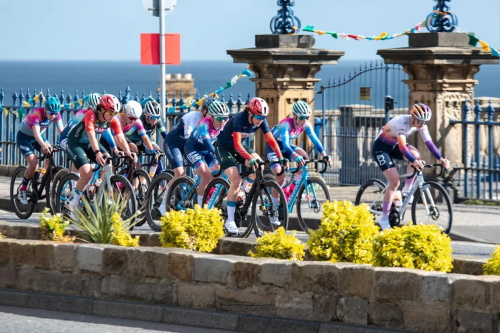
By Matteo Schneider | Updated on April 5, 2026 | 🕓 14 min read
Key Highlights
- Is cycling really about who is strongest?
- Why do top riders stay hidden in the peloton?
- What role do teams play in an “individual” sport?
- Why do different Grand Tours produce different winners?
- When is the race actually decided?
This isn’t about who has the strongest legs—it’s about who wastes the least.
Most people assume that a cycling race—especially something like the Tour de France—is a massive test of physical fitness. The intuitive belief is simple: the rider with the biggest lung capacity, the strongest quadriceps, and the most impressive power numbers should be the one rolling onto the Champs-Élysées first.
But reality is full of counterintuitive outcomes: the strongest rider often loses the hardest.
If a rider climbs too well, they may be “socially isolated” because no one wants to collaborate with them. If a team has the best sprinter, they can end up tactically “held hostage” by rivals all day. And the rider who ultimately stands on the top step of the podium often spends most of the race hidden behind teammates, sometimes looking like they’re barely trying.
To understand this paradox, we need to dig into the four layers of complexity in cycling. This is not just a sport—it’s an extreme experiment in physiology, aerodynamics, game theory, and organizational behavior.
Chapter 1: Individual Ability — The Quantified “Human Engine”
“Power (W/kg) and VO₂ max”
In professional cycling, talent has units. The first key metric is VO₂ max, which measures the body’s ability to use oxygen at maximal effort. A sedentary male typically has a VO₂ max of around 35–40 mL/kg/min, while elite Tour riders reach 70–85 mL/kg/min. This means that with every heartbeat, they deliver far more oxygen to their muscles than the average person.

Cycling Power Zones (Source: TrainerRoad)
The second metric is power-to-weight ratio (W/kg). On climbs, gravity is the only real enemy. Research shows that peak power output (PPO), when normalized by body weight, is a highly accurate predictor of time-trial performance. To reach astonishing outputs of 6.5–7 W/kg, professional riders must be extremely lean. Grand Tour champions like Tadej Pogačar or Jonas Vingegaard often maintain body fat levels as low as 4–6% during competition.
Fitness is not a master key
However, if power alone determined outcomes, cycling would be as predictable as weightlifting. It isn’t. A rider with absolute power who “hits the red zone” at the wrong moment—depleting glycogen—can drop from the lead group with shocking speed and end up being collected by the broom wagon. Fitness determines whether you can sit at the table—but it doesn’t guarantee you’ll win the game.
Chapter 2: Strategy — Drafting and “Invisibility”
“If power decided everything, the Tour would just be a time trial. It isn’t.”
On flat terrain at speeds above 50 km/h, the biggest resistance riders face is not gravity—it’s air resistance. Aerodynamic drag increases with the square of velocity. Double the speed, and the resistance quadruples.
The aerodynamics of drafting
“Drafting” means using the slipstream. When a rider sits closely behind another, they enter a low-pressure zone created by the front rider cutting through the air. Studies and race data show that riding in a peloton can save up to 30–40% of energy expenditure.
This creates cycling’s central strategic paradox:
leading is a punishment; following is a reward.
SANREMO, ITALY - MARCH 22: Tadej Pogacar of Slovenia and Team UAE Team Emirates competes during the 116th Milano-Sanremo 2025 a 289km one day race from Pavia to Sanremo / #UCIWT / on March 22, 2025 in Sanremo, Italy.
(Photo by Luca Bettini - Pool/Getty Images)
The rider at the front absorbs 100% of the wind resistance, while those behind conserve energy. If a rider doesn’t manage tactics well, they either burn out and get dropped—or get overtaken at the finish by fresher competitors who’ve been conserving energy all day.
Pacing and “the breaking point”
Racing isn’t just about speed—it’s about intelligent pacing. Over long stages, riders must monitor their Functional Threshold Power (FTP) and avoid exceeding their lactate threshold. Once a rider “blows up” on a climb, the physiological collapse quickly turns psychological.
This is why even a former Tour de France champion like Chris Froome, despite immense experience, struggled in later editions of the race—aging reduced his recovery capacity, and he was no longer able to consistently respond to sustained high-intensity mountain attacks.
Aha Moment
Cycling is not about who rides the fastest—it’s about who releases speed at the right moment. In the first 200 kilometers, the rider off the front is often just a “rabbit.” The real contenders are sitting comfortably in the peloton—sometimes looking like they’re out for a casual ride.
Chapter 3: Teamwork — The Ultimate Cognitive Reversal
“Cycling is a team sport built on collective sacrifice, producing an individual result.”
This is perhaps the most surprising aspect for outsiders: while the Tour crowns an individual champion (the yellow jersey), it is fundamentally a team war.
Unlike Formula One, where teammates may compete directly, cycling domestiques exist for one purpose: to sacrifice themselves for their leader.
The Sacrifice System
A team typically includes:
Domestiques: They control the pace, shield the leader from wind, and shuttle water bottles (often carrying 10 at a time).
Lead-out riders: In sprint finishes, they act like rocket boosters, pushing speeds up to 70 km/h before pulling off with 200 meters to go.
Climbing domestiques: In mountain stages, they push extreme pace to position their leader before dropping back—sometimes even missing time cuts.
The leader’s “invisibility cloak”
Watch a race closely, and you’ll see the GC (general classification) contender surrounded by teammates. This protects them from crashes and minimizes wind exposure. Riders like Tadej Pogačar can launch decisive attacks in the mountains because their teammates have saved them enormous energy over the previous 200 kilometers.
Cycling’s internal hierarchy challenges the idea of individual heroism. When a leader crosses the line in victory, somewhere 30 kilometers behind, a teammate—covered in dirt and completely exhausted—has already sacrificed their own race to make it possible.
Chapter 4: Race Design — The Ultimate Amplifier of Complexity
“Different races amplify different abilities.”
Why do some riders dominate the Tour but struggle in other Grand Tours? Why does the Giro d’Italia produce such unpredictable winners? Why is the Vuelta a España so chaotic?
Because race organizers act as “invisible architects,” shaping outcomes through course design.
Climbs vs Time Trials vs Crosswinds
Tour de France: Designed to reward all-around ability, combining time trials and high mountains.
Giro d’Italia: Known for extremes—featuring brutal gradients of 14–20% and long gravel sections (Strade Bianche), favoring endurance and resilience.
Vuelta a España: Characterized by short, explosive climbs and brutal third-week fatigue. The 2021 Vuelta a España included stages with over 4,600 meters of elevation gain in a single day, emphasizing recovery and explosive power.
This leads to a key realization: course design is a filter. It determines whether “machines” (time trial specialists) or “artists” (pure climbers) prevail.
Even a rider like Chris Froome succeeded in part because Grand Tour route design during his peak years offered a relatively balanced mix of time trials and climbing stages. Pure climbers, by contrast, often lose too much time against the clock to compete for the overall classification.
Conclusion: How to Truly Watch a Cycling Race
The next time you watch the Tour de France, forget the idea that the fastest rider wins.
Watch it like this instead:
1. Who is working?
Which team is controlling the front? If they’re pulling hard, they either have a strong leader—or a plan.
2. Who is hiding?
Are the favorites sitting quietly in the top 15, avoiding the wind? They’re saving energy for a decisive move.
3. What does the terrain say?
A flat sprint, a steep uphill finish, or a summit stage determines whether it’s a sprinter’s day or a GC battle.
Cycling is a perfect storm of biomechanics, aerodynamics, game theory, and organizational behavior. Its complexity comes from the fact that human limits are not just physical—but also cognitive, especially under extreme fatigue.
As many professional cyclists have reflected, the intense fear of failure and obsession with detail can both drive greatness—and, at times, lead to self-destruction.
That’s why we love this sport: it’s not about who is the strongest, but about who is the smartest—and whose team is willing to sacrifice everything for them.
FAQs
1. What is the most important metric in professional cycling?
Power-to-weight ratio (W/kg) is critical, especially in climbing stages, but it must be managed strategically over time.
2. What causes a rider to “bonk”?
“Bonking” happens when glycogen stores are depleted, leading to a sudden and severe drop in performance.
3. Are time trials more “fair” than road stages?
Time trials remove team tactics and drafting advantages, making them a purer test of individual power and pacing.
4. Why are mountain stages so decisive?
Climbing reduces the benefits of drafting and amplifies differences in power-to-weight ratio, exposing weaker riders.
References
1. Sanders, D., Heijboer, M., Hesselink, M. K. C., Myers, T., & Akubat, I. (2019). Analysing a cycling grand tour: Performance, fatigue, and recovery. International Journal of Sports Physiology and Performance, 14(5), 682–689.
2. Bicycling. (2021). The lead-out train: How sprint teams work in cycling. Bicycling Magazine.
3. Cycling Weekly. (2023). How much energy do you save when drafting in a group? Retrieved from https://www.cyclingweekly.com
4. Statista. (2024). Interest in cycling and endurance sports worldwide. Retrieved from [https://www.statista.com/]
5. Union Cycliste Internationale (UCI). (2023–2025). Technical and performance reports. Retrieved from [https://www.uci.org/]
About the Author
Matteo Schneider is a sports journalist and cycling analyst specializing in endurance racing and Grand Tour dynamics. With a background in sports communication and years of field reporting at European cycling events, he focuses on translating race strategy, physiology, and team tactics into accessible narratives for global readers.
Editorial Transparency Statement
This article is based on a combination of peer-reviewed sports science research, publicly available race data, and practical insights from competitive cycling. Every effort has been made to ensure accuracy, clarity, and relevance for both casual readers and enthusiasts.
The content is independently produced and is not sponsored by any teams, brands, or governing bodies. No conflicts of interest have influenced the analysis presented.
Disclaimer
This content is for informational and educational purposes only. It does not constitute professional coaching, medical advice, or personalized training guidance.
Readers engaging in cycling or endurance training should consult qualified coaches, sports scientists, or healthcare professionals before making significant changes to their training or nutrition routines.
=======
By Matteo Schneider | Updated on April 5, 2026 | 🕓 14 min read
Key Highlights
- Is cycling really about who is strongest?
- Why do top riders stay hidden in the peloton?
- What role do teams play in an "individualsport?
- Why do different Grand Tours produce different winners?
- When is the race actually decided?
This isn't about who has the strongest legs-it's about who wastes the least.
Most people assume that a cycling race-especially something like the Tour de France-is a massive test of physical fitness. The intuitive belief is simple: the rider with the biggest lung capacity, the strongest quadriceps, and the most impressive power numbers should be the one rolling onto the Champs-Élysées first.
But reality is full of counterintuitive outcomes: the strongest rider often loses the hardest.
If a rider climbs too well, they may be "socially isolatedbecause no one wants to collaborate with them. If a team has the best sprinter, they can end up tactically "held hostageby rivals all day. And the rider who ultimately stands on the top step of the podium often spends most of the race hidden behind teammates, sometimes looking like they're barely trying.
To understand this paradox, we need to dig into the four layers of complexity in cycling. This is not just a sport-it's an extreme experiment in physiology, aerodynamics, game theory, and organizational behavior.
Chapter 1: Individual Ability The Quantified "Human Engine/span>
"Power (W/kg) and VOmax/span>
In professional cycling, talent has units. The first key metric is VOmax, which measures the body's ability to use oxygen at maximal effort. A sedentary male typically has a VOmax of around 350 mL/kg/min, while elite Tour riders reach 705 mL/kg/min. This means that with every heartbeat, they deliver far more oxygen to their muscles than the average person.
Cycling Power Zones (Source: TrainerRoad)
The second metric is power-to-weight ratio (W/kg). On climbs, gravity is the only real enemy. Research shows that peak power output (PPO), when normalized by body weight, is a highly accurate predictor of time-trial performance. To reach astonishing outputs of 6.5 W/kg, professional riders must be extremely lean. Grand Tour champions like Tadej Pogačar or Jonas Vingegaard often maintain body fat levels as low as 4% during competition.
Fitness is not a master key
However, if power alone determined outcomes, cycling would be as predictable as weightlifting. It isn't. A rider with absolute power who "hits the red zoneat the wrong moment-depleting glycogen-can drop from the lead group with shocking speed and end up being collected by the broom wagon. Fitness determines whether you can sit at the table-but it doesn't guarantee you'll win the game.
Chapter 2: Strategy Drafting and "Invisibility/span>
"If power decided everything, the Tour would just be a time trial. It isn't./span>
On flat terrain at speeds above 50 km/h, the biggest resistance riders face is not gravity-it's air resistance. Aerodynamic drag increases with the square of velocity. Double the speed, and the resistance quadruples.
The aerodynamics of drafting
"Draftingmeans using the slipstream. When a rider sits closely behind another, they enter a low-pressure zone created by the front rider cutting through the air. Studies and race data show that riding in a peloton can save up to 300% of energy expenditure.
This creates cycling's central strategic paradox:
leading is a punishment; following is a reward.
SANREMO, ITALY - MARCH 22: Tadej Pogacar of Slovenia and Team UAE Team Emirates competes during the 116th Milano-Sanremo 2025 a 289km one day race from Pavia to Sanremo / #UCIWT / on March 22, 2025 in Sanremo, Italy.
(Photo by Luca Bettini - Pool/Getty Images)
The rider at the front absorbs 100% of the wind resistance, while those behind conserve energy. If a rider doesn't manage tactics well, they either burn out and get dropped-or get overtaken at the finish by fresher competitors who've been conserving energy all day.
Pacing and "the breaking point/span>
Racing isn't just about speed-it's about intelligent pacing. Over long stages, riders must monitor their Functional Threshold Power (FTP) and avoid exceeding their lactate threshold. Once a rider "blows upon a climb, the physiological collapse quickly turns psychological.
This is why even a former Tour de France champion like Chris Froome, despite immense experience, struggled in later editions of the race-aging reduced his recovery capacity, and he was no longer able to consistently respond to sustained high-intensity mountain attacks.
Aha Moment
Cycling is not about who rides the fastest-it's about who releases speed at the right moment. In the first 200 kilometers, the rider off the front is often just a "rabbit.The real contenders are sitting comfortably in the peloton-sometimes looking like they're out for a casual ride.
Chapter 3: Teamwork The Ultimate Cognitive Reversal
"Cycling is a team sport built on collective sacrifice, producing an individual result./span>
This is perhaps the most surprising aspect for outsiders: while the Tour crowns an individual champion (the yellow jersey), it is fundamentally a team war.
Unlike Formula One, where teammates may compete directly, cycling domestiques exist for one purpose: to sacrifice themselves for their leader.
The Sacrifice System
A team typically includes:
Domestiques: They control the pace, shield the leader from wind, and shuttle water bottles (often carrying 10 at a time).
Lead-out riders: In sprint finishes, they act like rocket boosters, pushing speeds up to 70 km/h before pulling off with 200 meters to go.
Climbing domestiques: In mountain stages, they push extreme pace to position their leader before dropping back-sometimes even missing time cuts.
The leader's "invisibility cloak/span>
Watch a race closely, and you'll see the GC (general classification) contender surrounded by teammates. This protects them from crashes and minimizes wind exposure. Riders like Tadej Pogačar can launch decisive attacks in the mountains because their teammates have saved them enormous energy over the previous 200 kilometers.
Cycling's internal hierarchy challenges the idea of individual heroism. When a leader crosses the line in victory, somewhere 30 kilometers behind, a teammate-covered in dirt and completely exhausted-has already sacrificed their own race to make it possible.
Chapter 4: Race Design The Ultimate Amplifier of Complexity
"Different races amplify different abilities./span>
Why do some riders dominate the Tour but struggle in other Grand Tours? Why does the Giro d'Italia produce such unpredictable winners? Why is the Vuelta a España so chaotic?
Because race organizers act as "invisible architects,shaping outcomes through course design.
Climbs vs Time Trials vs Crosswinds
Tour de France: Designed to reward all-around ability, combining time trials and high mountains.
Giro d'Italia: Known for extremes-featuring brutal gradients of 140% and long gravel sections (Strade Bianche), favoring endurance and resilience.
Vuelta a España: Characterized by short, explosive climbs and brutal third-week fatigue. The 2021 Vuelta a España included stages with over 4,600 meters of elevation gain in a single day, emphasizing recovery and explosive power.
This leads to a key realization: course design is a filter. It determines whether "machines(time trial specialists) or "artists(pure climbers) prevail.
Even a rider like Chris Froome succeeded in part because Grand Tour route design during his peak years offered a relatively balanced mix of time trials and climbing stages. Pure climbers, by contrast, often lose too much time against the clock to compete for the overall classification.
Conclusion: How to Truly Watch a Cycling Race
The next time you watch the Tour de France, forget the idea that the fastest rider wins.
Watch it like this instead:
1. Who is working?
Which team is controlling the front? If they're pulling hard, they either have a strong leader-or a plan.
2. Who is hiding?
Are the favorites sitting quietly in the top 15, avoiding the wind? They're saving energy for a decisive move.
3. What does the terrain say?
A flat sprint, a steep uphill finish, or a summit stage determines whether it's a sprinter's day or a GC battle.
Cycling is a perfect storm of biomechanics, aerodynamics, game theory, and organizational behavior. Its complexity comes from the fact that human limits are not just physical-but also cognitive, especially under extreme fatigue.
As many professional cyclists have reflected, the intense fear of failure and obsession with detail can both drive greatness-and, at times, lead to self-destruction.
That's why we love this sport: it's not about who is the strongest, but about who is the smartest-and whose team is willing to sacrifice everything for them.
FAQs
1. What is the most important metric in professional cycling?
Power-to-weight ratio (W/kg) is critical, especially in climbing stages, but it must be managed strategically over time.
2. What causes a rider to "bonk
"Bonkinghappens when glycogen stores are depleted, leading to a sudden and severe drop in performance.
3. Are time trials more "fairthan road stages?
Time trials remove team tactics and drafting advantages, making them a purer test of individual power and pacing.
4. Why are mountain stages so decisive?
Climbing reduces the benefits of drafting and amplifies differences in power-to-weight ratio, exposing weaker riders.
References
1. Sanders, D., Heijboer, M., Hesselink, M. K. C., Myers, T., & Akubat, I. (2019). Analysing a cycling grand tour: Performance, fatigue, and recovery. International Journal of Sports Physiology and Performance, 14(5), 68289.
2. Bicycling. (2021). The lead-out train: How sprint teams work in cycling. Bicycling Magazine.
3. Cycling Weekly. (2023). How much energy do you save when drafting in a group? Retrieved from https://www.cyclingweekly.com
4. Statista. (2024). Interest in cycling and endurance sports worldwide. Retrieved from [https://www.statista.com/]
5. Union Cycliste Internationale (UCI). (2023025). Technical and performance reports. Retrieved from [https://www.uci.org/]
About the Author
Matteo Schneider is a sports journalist and cycling analyst specializing in endurance racing and Grand Tour dynamics. With a background in sports communication and years of field reporting at European cycling events, he focuses on translating race strategy, physiology, and team tactics into accessible narratives for global readers.
Editorial Transparency Statement
This article is based on a combination of peer-reviewed sports science research, publicly available race data, and practical insights from competitive cycling. Every effort has been made to ensure accuracy, clarity, and relevance for both casual readers and enthusiasts.
The content is independently produced and is not sponsored by any teams, brands, or governing bodies. No conflicts of interest have influenced the analysis presented.
Disclaimer
This content is for informational and educational purposes only. It does not constitute professional coaching, medical advice, or personalized training guidance.
Readers engaging in cycling or endurance training should consult qualified coaches, sports scientists, or healthcare professionals before making significant changes to their training or nutrition routines.
>>>>>>> 63583bcf2d1c48866d6cb09279ca425cc19a4907 =======
>>>>>>> 63583bcf2d1c48866d6cb09279ca425cc19a4907
=======
>>>>>>> 63583bcf2d1c48866d6cb09279ca425cc19a4907
The Rise of Pickleball and Small-Court Sports: Why Racquet Games Are Becoming Faster, Smaller, and More Social
=======
>>>>>>> 63583bcf2d1c48866d6cb09279ca425cc19a4907
LA28 Olympics: Why Squash, Flag Football, and Cricket Are Shaping the Future of the Games
=======
>>>>>>> 63583bcf2d1c48866d6cb09279ca425cc19a4907
From Niche to Mainstream: The Explosive Growth of Competitive Climbing and Sport Climbing
=======
>>>>>>> 63583bcf2d1c48866d6cb09279ca425cc19a4907
Is Adventure Racing the Next Big Outdoor Trend in Asia?